

Mum & Baby
Starting solids

This article may help answer:
When should a baby start eating solid food?
What foods do you introduce to baby first?
What foods could my baby be allergic to?
Get ready for life to get a bit messy. If your baby is between four and six months old, it’s time to introduce solid foods. At this age your little one is probably able to sit upright without too much help and may be able to hold their own neck and head up quite well.
Your little one’s digestive system is also developed enough to tackle solids and they have probably started showing an interest when you’re eating.
It’s important to know that breast or formula feeding should continue while introducing solids, and should remain your baby’s primary source of liquid until 12 months. Introduce other liquids as follows:
At 6 months: Cooled boiled water can be offered in a cup.
At 9 months: Cow’s milk can be offered in small amounts on cereal, but not as a main milk source.
At 12 months: Breast or formula feeding may continue, but cow’s milk can now be used as a main milk source.Reduced fat milks are not recommended for children under 2 years.
Find out more:

Many parents choose to mix breast milk or formula with iron-fortified rice cereal as baby’s first introduction to solid food. The familiar taste of the milk will appeal to bub as they get used to this strange new consistency. You can find this kind of cereal at your pharmacy or in the baby aisle of the supermarket.
Finely mashed or pureed fruits and vegetables are perfect for a young baby. Don’t add any sugar, salt or spices – you’ll know from tasting it yourself that pureed veg like carrot and fruit such as pear is packed with flavour. Watching your baby’s face screw up with confusion or light up in delight as they taste new food can be a wonderful experience.
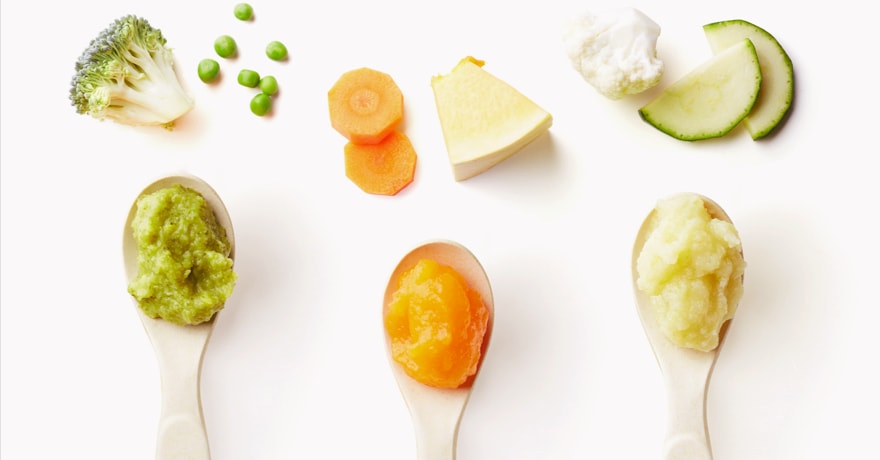
Do not give your baby hard pieces of fruit or vegetable and do not leave them alone while eating
Don’t worry if your baby rejects the first solids, or seems to push more out of their mouth than they swallow. As well as being a new experience for them taste-wise, they need to master how to use their tongue to keep food in their mouth.
From around the age of eight months your baby might be ready to start feeding themselves. Finger foods, such as soft pieces of banana or melon, soft cooked pasta, toast fingers or baby crackers are a great way for your little one to try new things independently.
Do not give your baby hard pieces of fruit or vegetable, popcorn, nuts or other hard foods, and do not leave them alone while eating as choking can occur.
Refer to this St John’s Ambulance Australia guide for what to do if your baby is choking.
Research shows that the sooner certain foods are introduced to your baby, the less likely they are to develop allergies. Introduce well-cooked egg and peanuts (usually in the form of peanut butter) before 12 months.
Other foods considered to be high-risk allergens are:
- fish
- shellfish
- sesame
- wheat
- dairy, such as cow’s milk
It’s a good idea to introduce any new food to your baby during the day so that you can see if any reaction occurs.
If your baby starts to have a reaction – such as a rash, swollen lips, trouble breathing or vomiting – stop feeding and seek medical help. Call triple 0 (000) if the reaction looks severe or life threatening.
You’ve read advice on:
 Starting baby on solids
Good first foods for baby
Allergens and when to introduce them


